Wondering how to become an opera singer? Expect a long road: a music degree, graduate study, a young artist program, then years of auditions. You’ll need strong technique, languages and patience. Start with your voice.
This guide sits within the wider world of opera singers, from first training to the working stage.
| Item | Value |
|---|---|
| Young artist program age range | 18-35 years, depending on voice type and readiness |
| Heaviest rehearsal load | Up to six hours a day in the final weeks before opening night |
| Full-time chorus season | About 170 performances, six days per week |
| Soloist time on the road | Up to 10 months a year |
| Languages most operas use | Italian, French, German, English or Russian |
| Small-stipend young artist pay | $100/week or similar at some programs |
These figures come from Berklee’s opera singer career profile and CS Music’s column on young artist programs. They can change, so check the sources before you rely on them.
The usual path from student to professional
In the United States, Berklee describes a well-trod path that many aspiring singers follow. It is long, and each stage feeds the next:
- Earn a music degree from a college or conservatory.
- Attend graduate school.
- Land a spot in a selective young artist program.
- Spend years auditioning and entering competitions.
- Eventually find consistent work singing small roles.
After that, a divide opens between singers who are happy in the chorus and those who pursue solo roles. Berklee notes that a permanent chorus position can provide full-time employment and benefits, while many singers prefer to freelance as soloists (Berklee).
No route is guaranteed. Baritone Lucas Meachem writes that there is no formula for starting a career in opera, though he adds that singing professionally is a viable career if you are smart about it (Lucas Meachem’s blog).
Skills to build before you audition
Put your voice first. Meachem calls vocal production the most important deciding factor for a career, and says teachable things like languages can wait until later. His point is that nobody pays for accurate French vowels on top of a shaky technique.
Alongside technique, Berklee’s career profile lists the skills an opera singer needs:
- Singing and vocal training
- Opera repertoire
- An aptitude for foreign languages
- Acting
- Reading music notation
- Auditioning
- Music theory and music history
Languages matter because most operas are in Italian, French, German, English or Russian, so singers practise diction in tongues that are not their own (Berklee). A Lawrence University career page adds advanced sight reading and strong memorization, since some operas run up to four hours (Lawrence University Career Center).
Knowing your voice type shapes which programs and repertoire suit you. Whether you are a coloratura soprano or a baritone, a teacher can help you choose roles that fit where your voice is now. If you are a coloratura soprano, that choice will look different than it does for a heavier voice.
How graduate study and young artist programs fit in
Many companies expect advanced training. A Lawrence University career page says opera singers are often required to have at least a master’s degree in a voice-related field, followed by a young artist program at an opera house (Lawrence University Career Center). Boston Conservatory at Berklee, as one example, describes an opera performance master’s whose curriculum includes Acting for Singers and Movement for Singers (Boston Conservatory at Berklee).
Graduate school is not the only door. Houston Grand Opera’s staff say there is no single path: some singers go to graduate school, some move directly into young artist programs, and some current studio artists skipped graduate school altogether (Houston Grand Opera).
CS Music says most American operatic careers begin with young artist programs, known as YAPs. Participants range in age from 18-35, and most singers spend their 20s as young artists (CS Music).
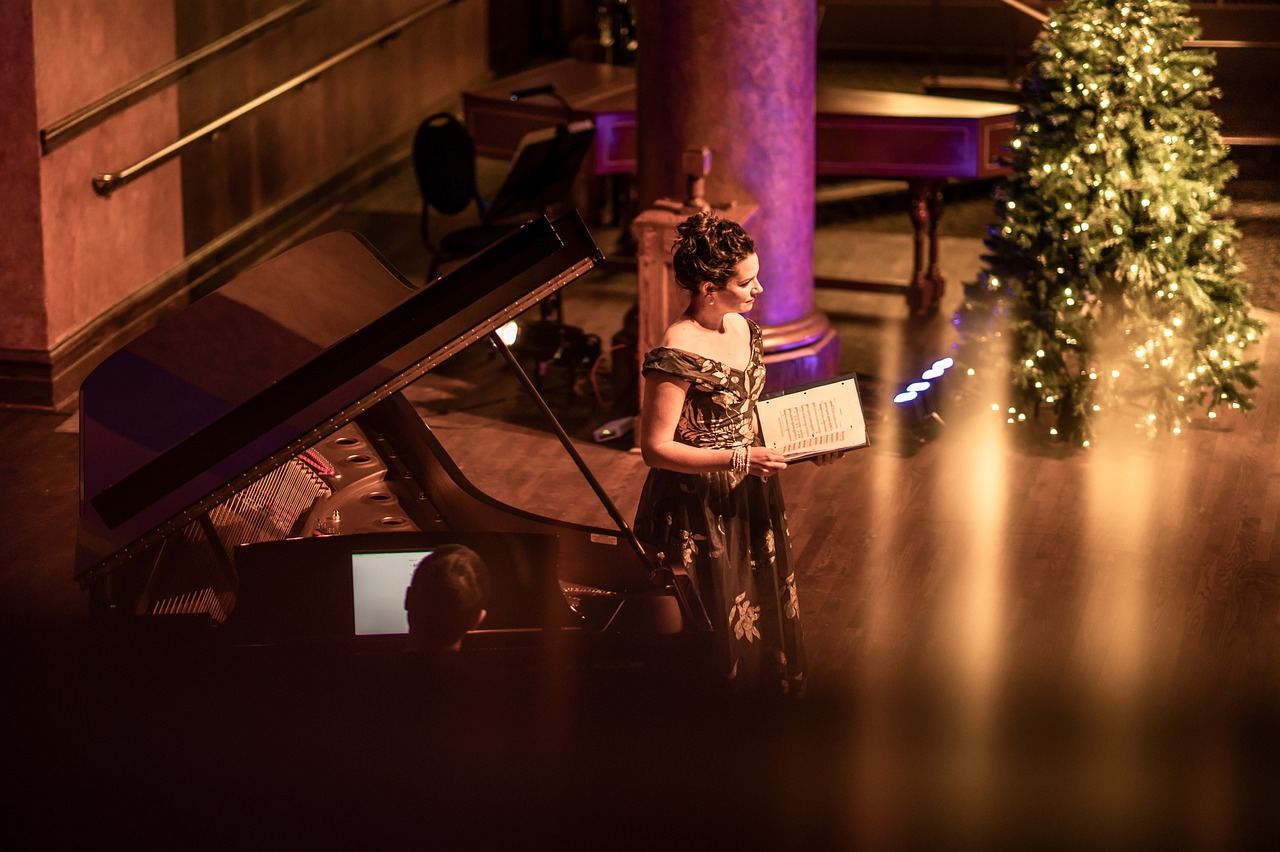
These programs offer training, stage time and introductions to conductors, directors, coaches and teachers. Meachem goes further and says the most important thing a singer gains in a YAP is connections.
Pay varies widely. CS Music describes programs that charge tuition, programs that are free, and others on a small stipend of $100/week or similar, while bigger houses run YAPs under AGMA union contracts (CS Music).
Starting earlier: high school and undergraduate programs
You do not have to wait for graduate school to see how a company works. CS Music reports that Pittsburgh Opera accepts high school students in grades 10-12 who are considering a career in the performing arts, including on the administrative side (CS Music).
The company’s director of education sees value even if a student decides against the field. In her view, that outcome saves them from spending years and a lot of money on a degree they will not use.
At the undergraduate stage, Houston Grand Opera described in a May 2025 post an intensive week of training, mentorship and discovery for undergraduate singers. It runs as two groups of eight, 16 singers in all (Houston Grand Opera). Its aim is to connect foundational skills to the professional world.
Competitions, auditions and relationships
Meachem recommends entering competitions even if you do not win, because people who want to help young artists attend them. He suggests easing in: if you are at the beginning level, start with something like NATS rather than the Met Competition. He also met his first agent at a competition.
Auditions revolve around the music you choose. CS Music asks singers whether they know which aria they sing better than anyone else and whether they present themselves professionally (CS Music). If the term is new to you, start with a short explainer on what is an aria.
Relationships carry real weight. Berklee says finding auditions and work generally means tapping into a network of opera professionals (Berklee). Meachem adds that an agent will usually find you during or after a young artist program, so you need not chase one early.
Timing matters too. Meachem argues that leaving a master’s degree at 24 or 25 is too soon for a major career in most cases, and suggests that 26-32 is a good range for starting professionally. That is one singer’s opinion, not a rule (Lucas Meachem’s blog).
What working life looks like
Opera singing is a demanding job well beyond the singing itself. In the final weeks before opening night, singers may spend as many as six hours a day in rehearsals, often with extra coaching for soloists (Berklee).
Soloists with flourishing careers may spend as many as 10 months a year on the road. Full-time chorus singers typically perform six days per week, averaging 170 performances in an opera season.
Between productions, singers learn new material, translate text, improve their languages and work on acting. Berklee calls caring for and cultivating the voice their most vital task.
Is the cost and uncertainty worth it?
The honest answer depends on your resources and your resilience. Berklee’s bottom line is that the profession requires thorough training, financial resources and many years to become established.
Houston Grand Opera’s academy includes a session with a financial advisor on weighing the costs of graduate school and understanding how debt shapes choices. It calls opera a profession that can lack stability (Houston Grand Opera).
Meachem’s verdict is blunt: it is tough and brutal, but he did not say it is impossible. Treat each stage as a chance to test whether you still want this life, and be honest with yourself about how your voice is developing.
Frequently asked questions
Do I need a master’s degree to become an opera singer?
Show answer
Often, yes. A Lawrence University career page says singers are often required to have at least a master’s degree in a voice-related field. Houston Grand Opera notes that some singers move directly into young artist programs instead, so check what each company asks for.
How old do I have to be to start a professional career?
Show answer
CS Music says young artists range in age from 18-35, depending on voice type and readiness. Lucas Meachem suggests 26-32 for starting professionally, as his own view. Neither is a hard limit, and both stress readiness over age.
What matters most early on: voice or languages?
Show answer
Meachem argues that vocal production is the most important deciding factor, with languages and other teachable skills coming later. Berklee still lists foreign languages and diction among the core skills, so plan to build both over time.
Do I need an agent before a young artist program?
Show answer
According to Meachem, an agent will usually find you during or after a young artist program, so you do not need to chase one yourself. Your focus before then is training, auditions and relationships.