If you are weighing opera vs musical theater singing, here is the short answer. Opera projects unamplified with steady vibrato and a lowered larynx; musical theater leans on speech-like clarity, often microphones, belt and mix.
This guide is part of the site’s coverage of opera singers, and it compares the classical stage with the musical theater stage.
| Item | Value |
|---|---|
| Opera projection | Over an orchestra, without amplification |
| Musical theatre amplification | Singers often given microphones |
| Larynx in classical technique | Lowered |
| Larynx in Broadway belt | Speech level |
| Belt’s bright-timbre energy region | 4,000 to 4,500 hertz |
| Broadway belting workload | Eight shows a week |
These figures come from Classical Music magazine and a voice teacher’s article in Classical Singer. They can change as research and practice develop, so check the sources before you rely on them.
The big picture: sung drama versus songs and scenes
The simplest split is structural. An opera is primarily sung, whereas in a musical the songs are interspersed with passages of dialogue, according to Classical Music magazine.
That structure shapes what each kind of singer trains for. The same source describes how the two forms balance music and words:
- In opera, the singing is split between arias, recitatives and bigger chorus numbers.
- In opera, music is at the forefront, whereas in musical theatre, the words are key to the plot development.
- There can often be bigger dancing numbers in musicals.
The line is not always sharp. Stephen Sondheim’s Sweeney Todd is a musical that is often categorised as an opera, because of its focus on the libretto and its limited speech.
Why projection, microphones and vibrato differ
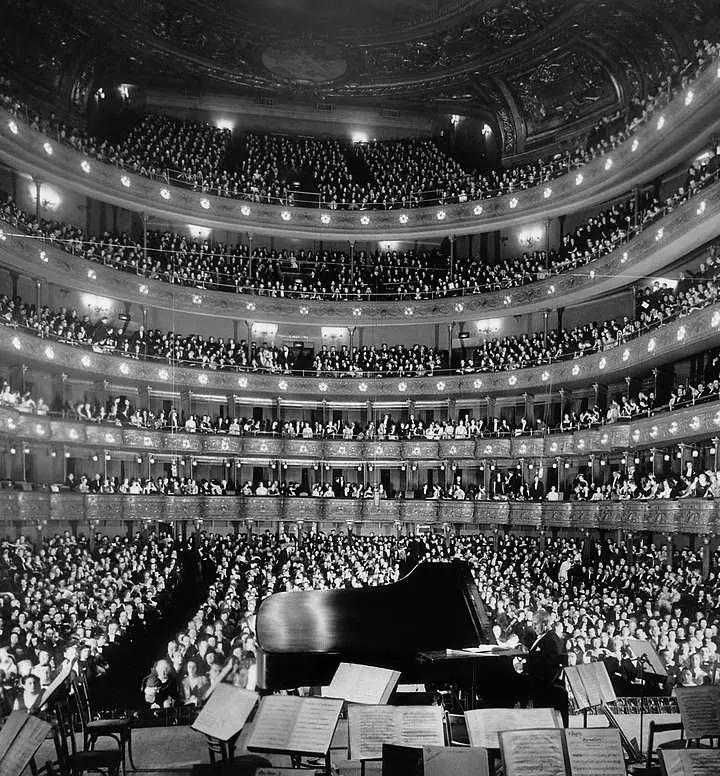
The biggest practical gap is amplification. Opera was performed before microphones were created, so opera singers had to project over the orchestra without amplification. Musical theatre is a newer art form, so its singers are often given microphones to help them be heard over a loud band or orchestra, as Classical Music magazine explains.
The same magazine notes in a separate piece on vibrato that voice types in opera often use much more vibrato and are often much louder. Vibrato has the effect of warming up the voice and helping it carry over a large orchestra and across a concert hall.

How the larynx, mouth and breath behave
Voice teacher Andrew White compared tenor Jonas Kaufmann in a classical excerpt with Ramin Karimloo in a Broadway one, both in the same tessitura. He found the quality of sound totally different, and he pointed to several physical differences in his Classical Singer article.
- Larynx: classical technique lowers it, while speech-level singing keeps it where it sits in speech.
- Mouth: Kaufmann’s mouth opens considerably further, while Karimloo’s barely opens beyond what is expected in normal speech.
- Vibrato: Kaufmann demonstrates consistent vibrato, even on short notes, while Karimloo allows it only at points of musical resolution.
- Breath: White finds the belt sound very economical in terms of breath flow, so most males can sing a longer phrase in a belt than in a legit sound.
White ties belt’s bright timbre to energy in the area of 4,000 to 4,500 hertz. He argues that successful Broadway singers belting eight shows a week without vocal injury are using a speech-level larynx, not an elevated one.
Treat this as one experienced teacher’s view. He wrote in 2016 that, to his knowledge, no studies had shown physiologically and acoustically what these differences are in male singing.
If you want more classical context, start with what is bel canto, then come back to this comparison.
What is mix, and where do belt and legit fit?
Voice teacher Kate Merryman describes mix as a technique that allows seamless transitioning between vocal registers. Susan Eichhorn-Young puts it more plainly: it really is simply mixing resonances together. Both comments appear in a Classical Singer roundup of voice teachers.
Bass-baritone Daniel Klein explains the vocabulary in the same roundup. Head voice usually refers to higher notes, chest voice to the lower end of the range and closer to the speaking range, and middle voice sits between them.
The labels are not identical for everyone. White says that, as an industry term, belt is not used to refer to male singing, and that the term legit is used for both men and women. For classical voice-type basics, see what is a soprano.
Men do mix too. Merryman says it gives resonance to higher pitches and helps maintain a resonant sound through the passaggio, while Eichhorn-Young notes that male voices tend to be chest dominant.
Can one singer move between both worlds?
Yes, and some teachers work in both. The roundup describes Merryman as an avid performer of both opera and musical theatre, and Eichhorn-Young’s clients include artists from the worlds of opera, musical theatre, film and television, as Classical Singer reports.
Klein argues that the range inside musical theatre is huge. In his view, the vocal demands between different Broadway shows are far larger than the differences stylistically and vocally between Rossini and Verdi.
A University of Denver student paper takes the same direction, aiming to keep breaking down the tangible wall between opera and musical theater techniques. It also argues that basic acting training can help boost your singing ability, according to the paper’s abstract.
Merryman offers exercise ideas for feeling the difference between registers. These are teacher suggestions, so work with a qualified teacher rather than copying them alone:
- Different vowels and onsets can help you discover different sounds.
- For head voice, the vowels /u/ and /i/ are helpful.
- For belt, try a trumpet-shaped vowel like /ae/ or /a/, and remember the goal is not to sound pretty.
- Be careful not to confuse nasality with mix.
- Work on your chest register too, since it is a key factor in learning to mix and belt.
Frequently asked questions
Do musical theater singers use vibrato?
Show answer
Yes, but often more sparingly. In White’s comparison, Karimloo allows vibrato only at points of musical resolution, which White describes as an element of style. See his article for the detail.
Do men belt?
Show answer
White explains that, as an industry term, belt is not used to refer to male singing. Even so, he came to believe a student who applied “belt” and “legit” to himself was right that his technique changed significantly between styles. The source for this is White’s article.
Is mix the same as head voice?
Show answer
No. Klein says head voice usually refers to higher notes, while Eichhorn-Young describes mix as simply mixing resonances together. She also sees chest, head and mix as positions, not separate voices, since you have two folds and one voice, per the Classical Singer roundup.
Why do opera singers not use microphones?
Show answer
Part of the answer is vibrato, which helps an opera singer be heard throughout an auditorium without the use of a microphone. That is the explanation Classical Music magazine gives for the classical voice.