Wondering how to read a concert program before the lights go down? Check the order of pieces, the cast list and the running time, then skim the notes. A few minutes of reading changes how the whole evening feels.
This guide sits in the live music section of this independent opera site.
| Item | Value |
|---|---|
| Aida (Verdi), listed running time | 2 hours and 30 minutes |
| Carmen (Bizet), listed running time | 2 hours and 35 minutes |
| Die Meistersinger von Nürnberg (Wagner), listed running time | 4 hours and 35 minutes |
| Gianni Schicchi (Puccini), listed running time | 1 hour |
| Shortest known opera, L’Enlèvement d’Europe | 8 minutes |
| Operas in The Opera 101 running-times list | Over 200 |
These figures come from The Opera 101 running-times list. Running times can change with cuts, conductors and intervals, so check the source before you rely on them.
Start with the order of the program
The first thing to find is the running order. A page headed “Synopses and Order of Scenes”, as in the Kansas State University opera workshop program notes, tells you which scene comes first and who sings it. It also shows whether you are getting a whole opera or a set of excerpts.
Programs do not always stay inside opera. That same workshop page lists scenes from The Magic Flute, Carmen and La Cenerentola next to a number from the musical How to Succeed in Business Without Really Trying, so one evening can mix genres.
When you open the program, look for three things in the running order:
- The title of each piece and its composer, written in the K-State notes as the work, a dash, then the composer.
- Whether the piece is complete or an excerpt, such as the “Trio from Der Rosenkavalier” in the University of Victoria voice ensemble notes.
- The sequence itself, so you know when to expect a famous duet or a chorus.
Cast lists and voice types: who sings what
Beneath each piece, a program usually pairs characters with performers. In the K-State notes the format is the character, a dash, then the singer, as in the Magic Flute scene where Tamino and Papageno each get a line of their own. Matching characters to singers keeps you oriented when two voices overlap.
Full opera programs often add the voice type beside each role. Wikipedia’s opera project style page shows a sample role table that lists the role, the voice type and the premiere cast, and it says the voice types in the printed score should normally be the ones used. Its example is a Wagner premiere cast dated 2 January 1843, read at Wikipedia’s WikiProject Opera style guide:
- The Dutchman: baritone
- Senta, Daland’s daughter: soprano
- Daland, a Norwegian sailor: bass
- Erik, a huntsman: tenor
Once you know that pattern, a cast list becomes a map of the sound you are about to hear, from the lowest voice to the highest.
Program notes: read the story before the curtain
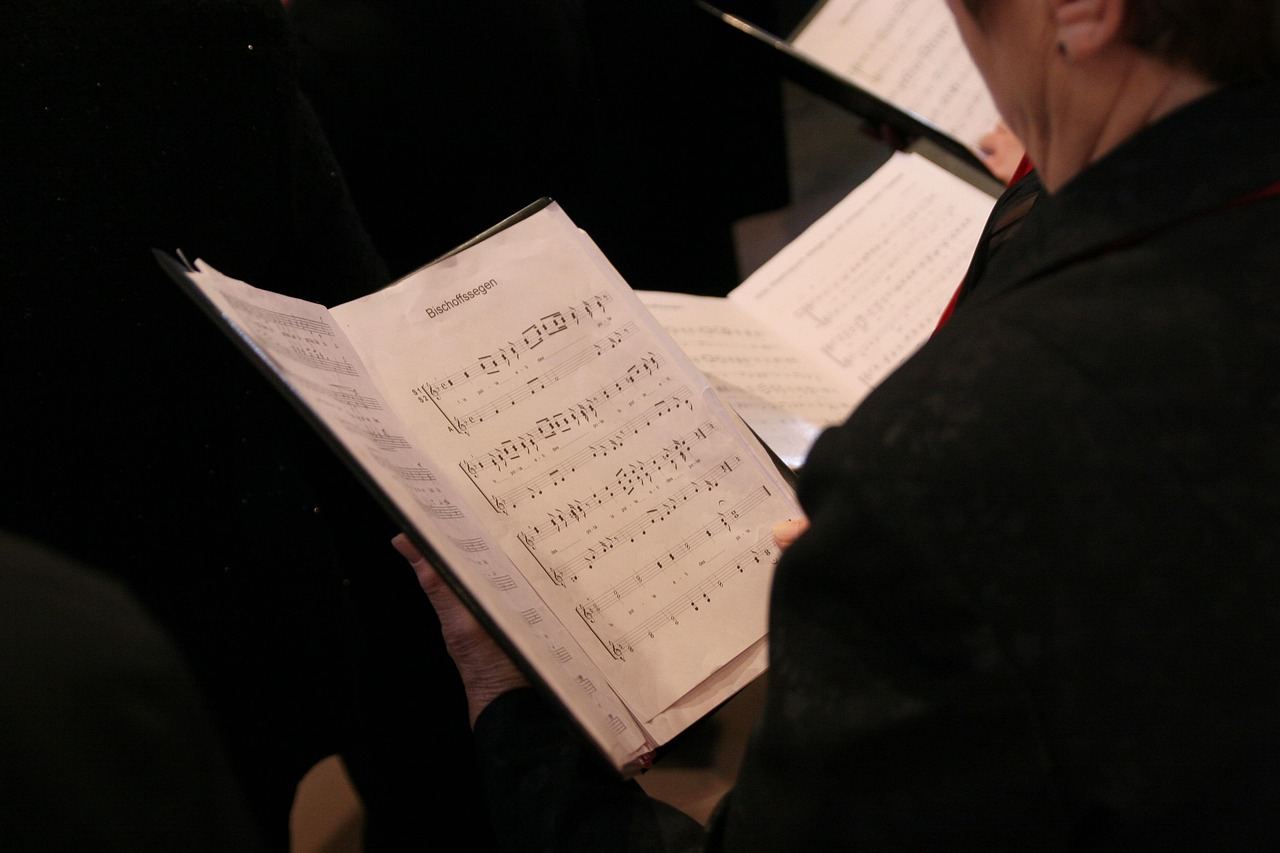
Notes retell the scene so you do not arrive halfway through the plot. The University of Victoria notes sum up “Sull’Aria” in one line: the Countess and Susanna write a letter to the Count, inviting him to a secret meeting in the pinegrove. For La Boheme, they simply say it is the act one duet between Mimi and Rodolfo.
Good notes also flag changes to the original. The same page says the Flower Duet from Lakmé is turned into a quartet, although it was originally a duet for Lakmé and Mallika. Knowing that in advance stops you wondering why there are more voices than you expected.
Notes may also credit the writers. The page describes a scene from Missy Mazzoli’s 100 Names for God and adds that its libretto was written by the Canadian librettist Royce Vavrek.
If the words worry you, the question of what are opera surtitles is worth a quick read before you go.
How long will you actually be there?
Treat any listed running time as a guide. The Opera 101 says to take its times with a small pinch of salt, because music can be cut, conductors vary their tempi, and you must add the number and length of intervals. It also leans towards longer estimates rather than shorter ones, so you are less likely to miss a train home.
Where it can, the list splits times act by act, and it keeps acts together when they are conventionally run together. A few examples from that list:
- Gianni Schicchi: 1 hour.
- Aida: 2 hours and 30 minutes, made up of 40 minutes for Act I, 45 for Act II and 65 for Acts III and IV.
- Carmen: 2 hours and 35 minutes, with 95 minutes for Acts I and II and 60 for Acts III and IV.
- Die Meistersinger von Nürnberg: 4 hours and 35 minutes, with 85 minutes for Act I, 65 for Act II and 125 for Act III.
The same source says the shortest opera it knows of, L’Enlèvement d’Europe, lasts a mere 8 minutes, and that its list covers over 200 operas. Length varies so much that a quick look at the printed running time is always worth it.
If you are still choosing a ticket, the guide to the best seats at the opera covers where to sit.
The credits page: who else shapes the evening
Past the singers, a program names the people who make the performance happen. The K-State example opens with a director and a pianist, and closes with additional credits for a stage manager, a sound engineer and editor, and a producer.
Reading the credits tells you who is at the keyboard or in charge of the staging. It also reminds you that a performance is the work of many people, not only the names on stage.
A short checklist before the lights go down
- Find the running order and note whether you will hear whole works or excerpts.
- Match each character in the cast list to a singer, and note the voice types if they are given.
- Read the synopsis or scene note for any piece you do not know.
- Check the running time, then allow for intervals and a longer evening than listed.
- Scan the credits for the director, the pianist and the rest of the team.
Frequently asked questions
Why can the real running time differ from the one listed?
Show answer
The Opera 101 notes that music can be cut, conductors vary in their tempi, and the number and length of intervals change how long you are at the theatre. Use a listed time as a guide, not a promise.
What does a cast list show?
Show answer
It pairs each character with the performer, and fuller programs add the voice type, such as baritone, soprano, bass or tenor. Wikipedia’s opera style page gives a role table as an example of this layout.
Can a program list scenes instead of whole operas?
Show answer
Yes. The K-State and University of Victoria examples are both made up of scenes, duets and ensembles drawn from larger works, with a short note explaining each one.
Do I need to read every program note before the performance?
Show answer
No. Start with notes on pieces you do not know, because they retell the scene, such as the Magic Flute moment that begins after the Three Ladies have placed a padlock on Papageno’s mouth. Skip the rest until the interval.